Postmenopause has a branding problem.
It often gets framed as the finish line, the chapter where everything “settles down,” emotions become tidy, and the body politely returns to a predictable schedule. That story sounds comforting. It also sets people up for a special kind of whiplash when real life keeps being real.
Postmenopause is typically defined as the stage after a full year without a period. It is not a personality change, a moral test, or a sign that someone has “failed” at aging gracefully. It is a hormonal landscape shift. The body keeps sending signals. The goal is learning how to read them without panic, shame, or a spreadsheet that turns self-care into a second job.
Myth 1: “Postmenopause means symptoms are over.”
This is the myth that shows up like an uninvited motivational speaker.
Yes, some symptoms often ease with time. But plenty of people notice that certain patterns continue, change shape, or show up in new ways. Sleep can still be fragile. Mood can still feel tender. Hot flashes may fade or linger. Vaginal and urinary changes can become more noticeable because lower estrogen can affect those tissues over time.
Major health organizations describe postmenopause as a stage where hormone levels remain low and stable compared to the swings of perimenopause, but “stable” does not always mean “silent.” The body can still be adjusting, and stress, alcohol, heat, travel, and illness can still amplify sensations.
What usually helps is swapping the question “Why is this happening again?” for “What’s the pattern?” Tracking a few simple signals for two weeks can be enough to spot triggers: bedtime variability, late caffeine, spicy dinners, or doom-scrolling that turns into a midnight TED Talk inside the brain.
Myth 2: “If it’s postmenopause, it’s all just aging.”
This myth is sneaky because it sounds mature.
It can be true that bodies change with time. It is also true that menopause-related shifts can overlap with aging in ways that are easy to dismiss. When everything gets filed under “just getting older,” people lose the chance to understand what the body is actually asking for.
Postmenopause can be associated with changes in bone health, heart health, body composition, and how the body handles temperature and sleep. That does not mean doom. It means context. It means the body’s signals deserve attention instead of a shrug.
What usually helps is focusing on the basics that tend to compound: consistent movement, strength training, fiber-forward meals, hydration, and sleep routines that are boring in the best way. Not because anyone needs to earn wellness points, but because the body often responds to consistency like it has been waiting for it.
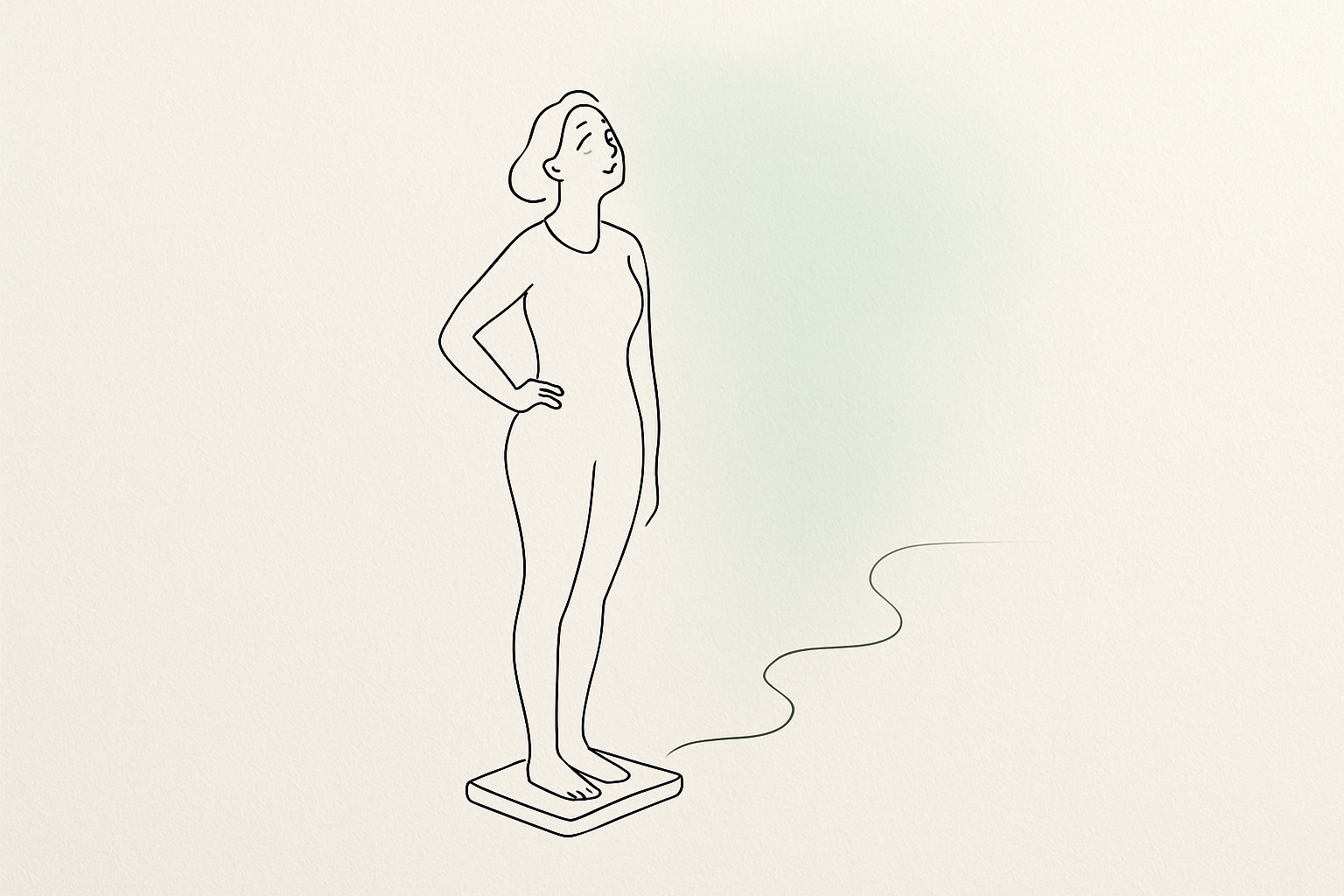
Myth 3: “Weight gain is inevitable and nothing helps.”
This one carries a lot of shame, which is exactly why it sticks.
Many people notice weight redistribution in midlife, often toward the abdomen. Metabolism, muscle mass, sleep quality, stress hormones, and activity patterns all play a role. Lower estrogen can be part of the picture, but it is rarely the only character in the story.
The myth says: “It’s inevitable, so why bother.” The more helpful truth is: the body may require different inputs now. Not harsher ones. Different ones.
What usually helps is shifting from punishment to information. Strength training supports muscle, and muscle supports metabolic health. Protein and fiber can support steadier appetite signals. Sleep supports everything, including cravings and stress resilience. None of this guarantees a certain number on a scale. It does tend to create a more cooperative relationship with the body.
Myth 4: “Brain fog means something is seriously wrong.”
Brain fog can feel like losing the plot in the middle of a sentence.
And because it is scary, the mind often fills in the blanks with worst-case stories. Many people report changes in memory, word-finding, and focus during the menopause transition. For some, those changes improve over time. For others, attention and sleep remain linked in a frustrating loop.
Major health organizations note that sleep disruption, stress, and mood changes can all influence cognition. In postmenopause, the swings may be less dramatic than perimenopause, but the aftereffects of years of disrupted sleep can linger.
What usually helps is reducing cognitive load on purpose. Fewer open tabs, more external memory. Simple lists, calendar alerts, and routines that remove daily decision fatigue. It sounds unglamorous because it is. It also works surprisingly well for a brain that is tired of improvising.
Myth 5: “Low libido is just the new normal.”
This myth turns intimacy into a closed door.
Postmenopause can bring changes that affect desire and comfort. Lower estrogen can contribute to vaginal dryness and discomfort with sex. Sleep issues, stress, body image shifts, and relationship dynamics can also play major roles. Libido is not a single switch. It is a whole control panel.
The common pattern is that people blame themselves first. Then they stop bringing it up. Then it becomes a quiet loneliness that looks like “fine.”
What usually helps is naming what is true without making it a crisis. Comfort matters. Context matters. So does communication that is specific, not performative: what feels good, what does not, what has changed, what is missed. Practical supports like lubricants and moisturizers are commonly used options for dryness. No one gets a medal for suffering through discomfort.
Myth 6: “Mood changes mean someone is being dramatic.”
Postmenopause has a long history of being minimized.
Some people feel emotionally steadier after the unpredictability of perimenopause. Others feel more anxious, low, or irritable, especially when sleep is disrupted or life stress is high. Mood is not a character flaw. It is information.
What usually helps is taking mood seriously without turning it into a personal indictment. Noticing timing, triggers, and recovery time can clarify what is happening. A short daily check-in can be enough: sleep quality, stress level, alcohol, movement, and social connection. Patterns often show up quickly, and they can be surprisingly empowering.
Myth 7: “Hot flashes and night sweats are only a perimenopause thing.”
Some people are relieved when hot flashes fade. Others are still negotiating with their thermostat at 2 a.m.
Hot flashes and night sweats can continue into postmenopause for some. Triggers can include alcohol, spicy foods, warm rooms, stress, and certain fabrics. The myth that they “should” be done can make ongoing symptoms feel isolating.
What usually helps is building a small, repeatable comfort plan. Layered bedding, a fan, breathable pajamas, and a cooler bedroom can reduce the intensity for many. Keeping a quick log of triggers can help identify the difference between random and predictable.
No one can promise an instant fix. But the body often responds to steady, practical adjustments more than grand gestures.
Myth 8: “Postmenopause is the end of becoming.”
This is the myth underneath all the others.
It says: the story is over, the best parts are behind, and the body is now an inconvenience to manage quietly. The collective experience tells a different story. Many people discover a new directness in this stage, a clearer sense of what matters, and less tolerance for pretending.
Postmenopause can be a time of recalibration. Not reinvention for the sake of reinvention, but a steady return to the self that got buried under caretaking, performance, and “being fine.”
What usually helps is making space for honest inventory. Which habits support steadiness? Which relationships feel reciprocal? Which expectations are outdated? The body’s signals are not interruptions. They are invitations to pay attention.
A grounded way to move forward
Debunking myths is not about winning arguments at brunch. It is about reducing unnecessary shame.
Postmenopause is not a single experience. It is a stage with common patterns and plenty of individual variation. The most supportive next step is often small: notice the signals, name the pattern, try one adjustment, and reassess.
Because the goal is not perfection. The goal is a life that feels more like belonging in the body that is here now.