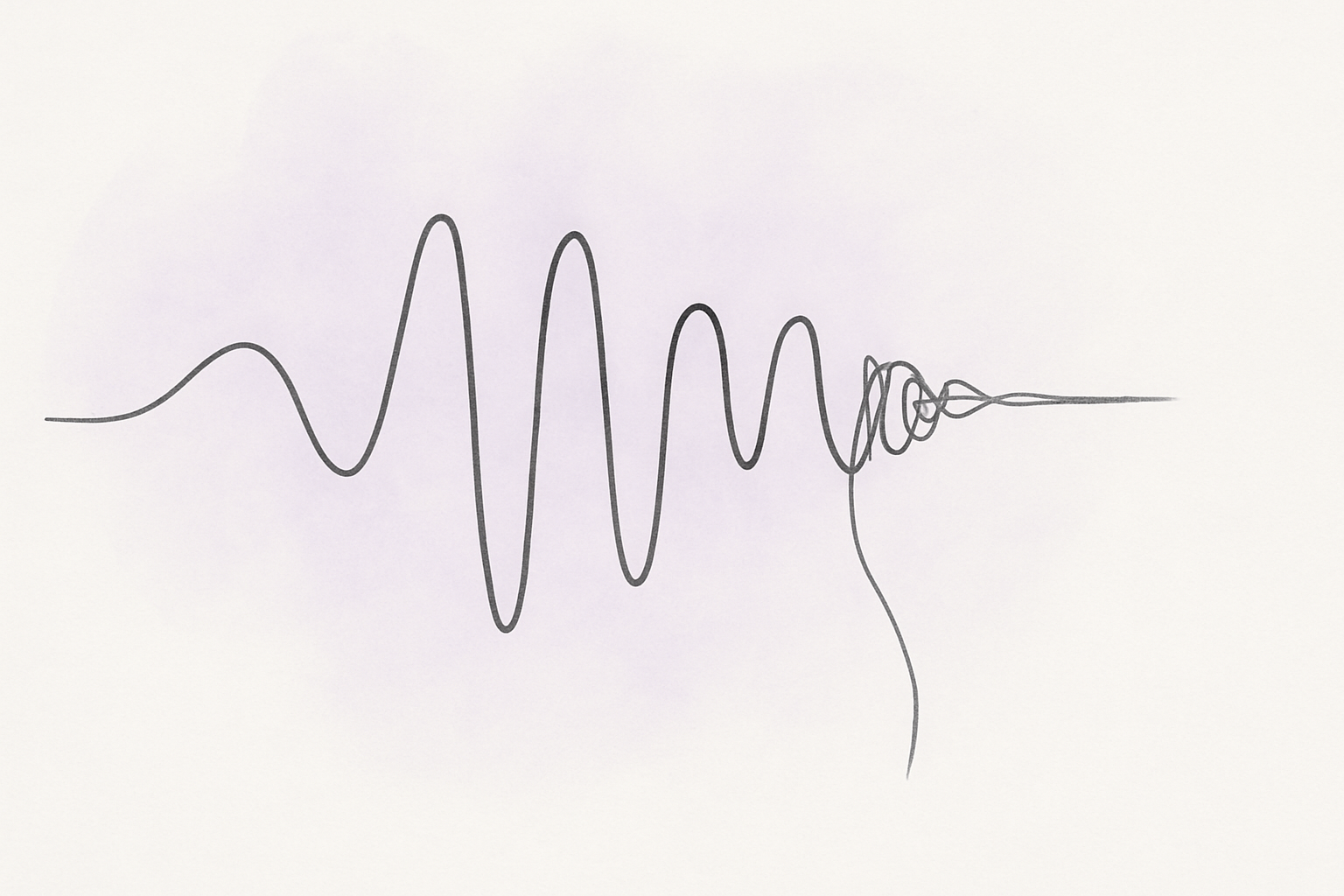

At a glance
- Brain fog affects roughly 60% of women during perimenopause.
- The most common workplace symptoms: losing words mid-sentence, forgetting what you walked into a room for, and struggling to follow a meeting thread.
- The cause is biological. Not stress, not age, not a lack of effort.
- Most symptoms improve as hormones stabilize, though the timeline is individual.
You’re in the middle of presenting. You know exactly what you want to say next. And then it’s gone. The word, the number, the thought. Just gone. You finish the sentence some other way and hope nobody noticed.
Or maybe it’s the emails you read twice before they sink in. The meetings where you have to work twice as hard to follow what used to come easily. The to-do list you wrote down because you can’t trust your memory the way you used to.
A lot of women in their 40s assume this is burnout. Or they think they’re just not sleeping well enough. Or they start to wonder, quietly, whether something more serious is happening.
For most women in perimenopause, the answer is simpler and more specific than any of those. It’s a hormone shift, and it’s affecting your brain in ways that are real, measurable, and worth understanding.
Why perimenopause affects the brain
Estrogen isn’t just a reproductive hormone. It plays an active role in how your brain functions: how neurons communicate, how your brain produces energy, and how it regulates the neurotransmitters tied to memory and focus.
When estrogen levels begin to fluctuate in perimenopause, these systems feel it. Research shows that brain glucose metabolism, the brain’s main energy source, declines during this transition. That reduction in fuel directly affects how quickly and clearly you can think.
The cognitive functions most commonly affected are verbal memory, verbal fluency, and processing speed. In practical terms: you lose words mid-sentence, take longer to retrieve information you know is there, struggle to stay focused in conversations, and forget what you were doing seconds after starting it.
These symptoms are not a sign of early dementia. Perimenopause-related cognitive changes are hormonally driven, not the same pattern as age-related cognitive decline. The National Institute on Aging notes that dementia before age 65 is rare, and forgetfulness during the menopause transition is a recognized and distinct pattern. For most women, symptoms improve as the body stabilizes post-menopause.
What this looks like at work
Brain fog at work often doesn’t look like a medical symptom. It looks like a bad week, or an off day, or needing more coffee. That’s part of why it goes unrecognized for so long.
Common patterns that show up at work include:
- Rereading the same email multiple times before replying
- Losing your train of thought mid-sentence in meetings
- Difficulty making decisions that used to feel automatic
- Feeling mentally exhausted by early afternoon
The unpredictability is its own challenge. Some days are sharp. Others, the same task feels impossible. That inconsistency is a known feature of perimenopause because hormone levels fluctuate daily, not in a steady decline. A workplace study on women navigating menopause in professional roles found that brain fog, sleep disruption, and anxiety were the symptoms participants described as most difficult to manage at work. Not hot flashes, which tend to get more attention.
Why it gets worse on some days
Brain fog doesn’t occur in isolation. Three factors tend to make it worse, and all three also cluster in perimenopause.
Poor sleep. Night sweats and 3am wake-ups reduce the deep sleep your brain needs to consolidate memory and clear metabolic waste. A night of disrupted sleep is enough to noticeably affect cognitive performance the next day. Many women in perimenopause are dealing with this chronically, not occasionally.
Anxiety. Cognitive symptoms intensify under stress. Anxiety is itself a common perimenopause symptom, and it narrows attention and makes word retrieval and concentration harder. The two symptoms tend to compound each other.
Blood sugar fluctuations. Estrogen helps regulate insulin sensitivity. As estrogen drops, blood sugar becomes less stable, which affects brain energy availability. The mid-afternoon mental crash some women experience isn’t just tiredness. It can reflect a glucose dip that hits cognitive function directly.
What actually helps
There’s no single fix. What the research does support is a combination of factors that reduce the load on a brain already working harder than usual.
Protect your sleep. Sleep is the highest-leverage intervention for cognitive symptoms. Addressing night sweats and sleep disruption, whether through bedding, temperature regulation, or talking to a doctor, has downstream effects on brain clarity the next day. Sleep Foundation and Johns Hopkins both identify sleep as one of the most significant levers for cognitive performance and recovery.
Stabilize blood sugar through meals. Balanced meals with protein, fat, and fiber slow glucose release and reduce the peaks and crashes that worsen brain fog. Skipping meals or eating high-carbohydrate meals without protein tends to make cognitive symptoms worse.
Move daily. Exercise increases cerebral blood flow and supports the same neurotransmitter systems that estrogen previously regulated. Even a 20 to 30 minute walk shows measurable effects on cognitive performance. It doesn’t need to be intense. NIH notes that regular physical activity is one of the most consistently supported habits for women in midlife.
Track when it happens. Many women notice that brain fog is worse on specific days, after poor sleep, before their period, or in the afternoon. Tracking when it happens makes it less random and gives you something to work with. This is exactly what GenMeno Pattern Tracker was built for. Not to log symptoms as a record, but to help you see what keeps returning and when.
Consider targeted supplements. Some nutrients have been studied specifically for cognitive support during midlife hormonal transitions, including omega-3 fatty acids, magnesium, and citicoline. The evidence varies by supplement and by individual. GenMeno reviews these based on ingredient quality, dosage, and third-party testing, not on marketing claims.
Talking to your doctor matters here. A clinician familiar with perimenopause can help distinguish hormonal cognitive symptoms from other causes, and discuss whether any additional support is appropriate for your situation.
When to pay closer attention
Perimenopause brain fog is common and usually temporary. That said, there are situations where it’s worth getting a proper evaluation:
- Symptoms are severe enough to significantly affect your ability to do your job
- You have a family history of early-onset Alzheimer’s or dementia under age 60
- Symptoms appear suddenly or worsen rapidly rather than gradually
- You notice changes in language, judgment, or behavior that feel qualitatively different from forgetfulness
For the vast majority of women in their 40s experiencing word-finding difficulty, memory lapses, and concentration problems alongside other perimenopause symptoms, a hormonal explanation is far more likely than a neurodegenerative one. The Study of Women Across the Nation (SWAN), one of the largest longitudinal studies of women through menopause, found that cognitive changes are largely limited to the perimenopause transition itself.
The bottom line
If you’ve been in back-to-back meetings all day and still can’t explain why you feel mentally emptied out by 4pm, it’s probably not a work problem. It might be a hormone problem, and that’s a different kind of problem to solve.
Understanding what’s driving the fog doesn’t make it disappear. But it changes how you respond to it. You stop blaming yourself for something your brain is navigating on your behalf.