
Menopause Explained
Menopause is a single point in time, confirmed later. The surrounding years can feel like a long story. This page gives you a calm map, clearer language, and the definitions people rarely explain well.
Quick anchor
Menopause is your final menstrual period. It’s typically identified after 12 months without a period.
Why this page exists
A simple map of the process
Most conversations treat “menopause” like a stage. In everyday life, it helps to think of it as a single event within a longer transition. The diagram below shows the common natural pathway.
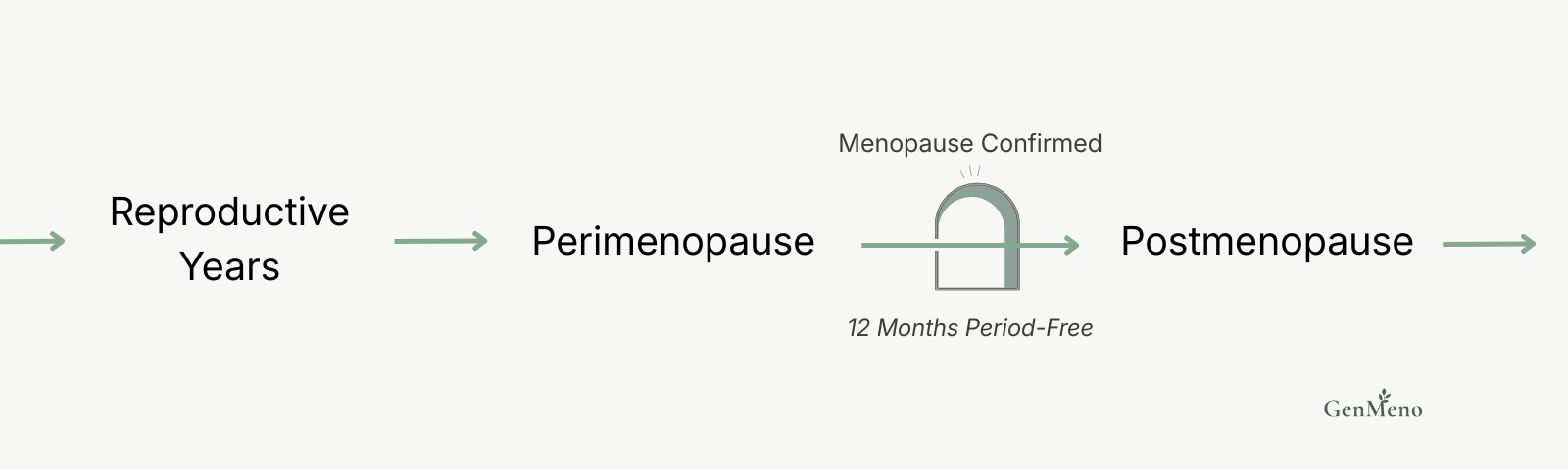
Note: Some people reach menopause through different pathways (surgery, treatment-related, or earlier timing). The map stays useful, even when the timeline shifts.
Definitions you can actually use
Perimenopause
The transition years when hormones fluctuate and cycles change. Some people notice obvious shifts. Others notice subtler patterns first, like sleep changes, mood sensitivity, or new body responses.
Menopause
The final menstrual period, confirmed after you’ve gone 12 months without a period (when periods stop naturally). It’s a point in time, not a long stage you “enter.”
Postmenopause
The time after the menopause event. Symptoms may settle, shift, or show up differently. Many women describe this as “a new baseline.”
Early vs. premature menopause
- Early menopause: menopause before age 45.
- Premature menopause: menopause before age 40.
If timing feels early for you, it’s worth discussing with a clinician, simply because the health considerations can be different.
The natural pathway, explained
This is the most common pathway: cycles begin to change in perimenopause, then menopause is identified in hindsight, then postmenopause follows.
What tends to change first
- Cycle length (shorter or longer, sometimes unpredictable)
- Sleep quality and the “3 a.m. mind”
- Temperature sensitivity (warmth, sweating, night sweats)
- Mood steadiness and stress tolerance
- Body composition and appetite signals
Why it can feel confusing
Perimenopause often behaves like a moving target. Symptoms may come and go. A good approach is to watch for patterns over time rather than try to label a single day.
Other pathways and why they feel different
Not everyone reaches menopause through the same sequence. These pathways can change timing, pace, and what “the transition” feels like.
Surgical menopause
When both ovaries are removed (often along with the uterus). Changes can feel sudden because the hormone shift can be immediate.
Hysterectomy without ovary removal
If the uterus is removed but ovaries remain, periods stop, but ovarian function may continue. This can make timing harder to interpret because the “period marker” disappears.
Primary ovarian insufficiency (POI)
Ovarian function declines earlier than expected. It can bring menopause-like symptoms at younger ages and often deserves specialized clinical guidance.
Treatment-related menopause
Certain treatments (such as chemotherapy, radiation, or endocrine therapies) can affect ovarian function and symptom patterns. Timing and reversibility vary.
If your situation includes surgery or treatment, many of the same symptom words still apply, but the timeline can behave differently. A clinician can help interpret what applies to you.
When it helps to get it checked
Many menopause transitions are normal and still feel disruptive. It can help to talk with a clinician when:
- Bleeding patterns change in ways that feel unusual for you (especially heavy or prolonged bleeding)
- Symptoms are affecting daily functioning in a persistent way
- Timing seems early (before 45), or very early (before 40)
- You’ve had surgery, cancer treatment, or hormone-related therapy and need tailored context
Bringing a short set of notes can make the appointment more productive. A pattern is often easier to discuss than a long story.
Language that tends to reduce confusion
When people say “I’m in menopause,” they often mean one of three different things. These alternatives usually land more clearly:
- “I’m noticing changes that fit perimenopause.”
- “I haven’t had a period for X months and I’m watching the timeline.”
- “I’m postmenopausal.”
Clearer language doesn’t solve everything, but it often makes conversations with friends, family, and clinicians less frustrating.
A gentle boundary
This page is educational. For personal medical decisions, a licensed healthcare professional is the best place to start. If you’re using GenMeno Pattern Tracker, it’s designed to support personal reflection and help you notice patterns over time.
Not sure where you are in your menopause journey?
The GenMeno Pattern Tracker is free. Start with the Stage Finder to see where you are, then track which menopause symptoms keep coming back. The pattern gives you something clear to bring to your doctor.
A little clarity in your inbox.
Weekly notes to help you notice patterns and find better words for what you’re feeling. Calm, practical, and you’re always free to leave anytime.